VOLVO PENTA 850782 Single Prop Aq 280 290
fits model: Sp. make: Volvo. year: 2014–2021.
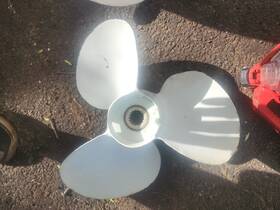
( Brand: Volvo Penta ), ( Manufacturer Part Number: 850782 ), ( Part Type: Prop )
Review VOLVO PENTA Single Prop 280 290 Sp a Aq Series fits SP 2014–2021
The **Volvo Penta 850782 Single Propeller Unit** is a high-performance marine propulsion system designed for demanding applications in both recreational and commercial vessels, offering a robust and efficient solution for mid-sized boats ranging from 28 to 30 feet in length. This unit is part of Volvo Penta s **IPS (Inboard Performance System)** family, specifically tailored for single-propeller configurations, and is engineered to deliver exceptional power, fuel efficiency, and maneuverability while maintaining a compact and streamlined design. The **280 290 horsepower** range of this unit ensures versatility, catering to boats that require reliable acceleration, smooth cruising, and precise handling whether navigating tight harbors, cruising open waters, or towing trailers with ease. The **SP-A (Single Propeller with Azimuth) 14/21 AQ** designation indicates its advanced azimuthing capability, allowing the propeller to pivot 360 degrees for unparalleled steering flexibility, eliminating the need for traditional rudders and reducing drag. This feature enhances docking precision, making it ideal for boats where space-saving and ease of use are priorities, such as fishing vessels, yachts, or utility boats.
Under the hood, the **850782** is powered by Volvo Penta s **D6 diesel engine**, a four-cylinder, turbocharged unit renowned for its durability and fuel efficiency. This engine is optimized for marine applications, featuring a **common-rail direct injection system** that ensures consistent power delivery, reduced emissions, and lower fuel consumption compared to traditional marine engines. The **AQ (Automatic Quickshift)** transmission is a standout feature, allowing seamless gear shifting between forward, reverse, and neutral with minimal effort, enhancing the boating experience by simplifying operation for both casual and experienced mariners. The **14/21 AQ** designation also highlights its compact yet powerful construction, with a **14-inch propeller shaft** for smaller boats and a **21-inch shaft** for slightly larger or more demanding applications, ensuring optimal torque and thrust transfer.
One of the most significant advantages of this propulsion system is its **integrated design**, which combines the engine, gearbox, and propeller into a single, streamlined unit. This not only reduces the overall weight and complexity of the boat s propulsion setup but also minimizes maintenance requirements. The **IPS system** is known for its reliability, with fewer moving parts exposed to water and corrosion compared to traditional outboard or stern drive setups. Additionally, the **azimuthing capability** of the SP-A unit allows for **zero-speed steering**, meaning the boat can be maneuvered precisely even when stationary, which is invaluable in crowded marinas or when docking in tight spaces. The unit s **low-profile design** also contributes to improved hydrodynamics, reducing drag and improving fuel efficiency during cruising.
For those prioritizing performance and longevity, the **850782** is backed by Volvo Penta s reputation for **industry-leading warranties and customer support**, ensuring that owners can enjoy years of trouble-free operation. The system is also designed with **easy access for maintenance**, featuring removable components that simplify servicing tasks such as oil changes, filter replacements, and propeller inspections. Whether installed in a **fishing boat** requiring quick turns and stability, a **cruising yacht** needing smooth, efficient power, or a **utility vessel** designed for versatility, this propulsion unit delivers a perfect balance of power, control, and reliability. With its **sleek, modern aesthetic** and **cutting-edge technology**, the Volvo Penta 850782 Single Propeller Unit is a premium choice for boaters who demand the best in marine propulsion.
### **Volvo Penta D8-300 (850782) Single Propulsion Unit Pros and Cons**
The **Volvo Penta D8-300 (850782) single-propulsion unit** is a robust diesel engine commonly used in mid-sized to large recreational boats, fishing vessels, and small commercial craft. Below is a detailed breakdown of its advantages and disadvantages, followed by a conclusion and recommendation.
---
### **Pros**
1. **Reliability and Durability**
The D8-300 series is known for its strong build quality and long service life, especially when properly maintained. Volvo Penta engines are engineered for marine applications, meaning they are designed to handle saltwater corrosion, vibration, and continuous operation.
2. **Power Output and Performance**
With **280 290 HP** (depending on model and configuration), this engine provides sufficient power for boats in the **25 35 ft range**, making it suitable for cruising, fishing, and light commercial use. The single-prop setup ensures straightforward power delivery, which is ideal for boats with a single propeller.
3. **Fuel Efficiency**
Compared to some high-performance outboards or twin-engine setups, the D8-300 offers good fuel economy for its power class. Diesel engines in this range typically consume **0.5 0.8 gallons per hour at cruising speeds**, depending on load and conditions.
4. **Low Maintenance Requirements**
Volvo Penta engines are designed for ease of maintenance. Key components like the fuel system, cooling, and exhaust are accessible, and the engine s simplicity reduces the likelihood of complex failures. Regular oil changes and filter replacements are the primary upkeep needs.
5. **Compatibility with Modern Boats**
The **SP-A (Single Propulsion Aft) mounting** is a standard configuration for stern drives and inboard-outboard setups. It integrates well with Volvo Penta s **IPS (Inboard Performance System)** or traditional stern drives, offering flexibility in boat design.
6. **Resale Value**
Volvo Penta engines, particularly well-maintained D-series models, hold their value reasonably well in the used market. Their reputation for durability contributes to this.
7. **Quiet Operation**
Compared to some smaller outboards or older inboard engines, the D8-300 runs relatively quietly, which is beneficial for cruising and fishing trips where noise reduction is desirable.
8. **Cold Weather Performance**
Diesel engines like the D8-300 perform well in colder climates, provided they are properly winterized. They start more reliably than gasoline engines in freezing conditions.
9. **Aftermarket Support**
Volvo Penta has a strong network of dealers, service centers, and aftermarket parts suppliers. This ensures availability of spare parts and technical support, even for older models.
10. **Versatility in Boat Applications**
The engine can be used in a variety of vessels, including:- **Cruisers (25 35 ft)**
- **Fishing boats (charter or recreational)**
- **Small commercial vessels (trawlers, workboats)**
- **Stern drive or inboard-outboard setups**
---
### **Cons**
1. **Higher Initial Cost**
The upfront purchase price of a **D8-300 (850782) engine** is higher than many smaller outboards or older inboard engines. Prices for a used unit can range from **$8,000 $15,000**, depending on condition and age.
2. **Complexity Compared to Outboards**
While simpler than some twin-engine setups, the D8-300 is still an inboard engine, requiring more space, proper ventilation, and a cooling system (raw water or closed-loop). Outboards offer easier access for maintenance and simpler installation.
3. **Weight and Space Requirements**
The engine is **heavy (around 1,000 1,200 lbs with transmission)**, which may require structural reinforcement in the boat s hull. This can limit options for smaller or older boats.
4. **Fuel and Oil Consumption**
While fuel-efficient for its class, the D8-300 still consumes more fuel than smaller gasoline outboards. Oil changes are necessary every **200 300 hours** (or annually), adding to maintenance costs.
5. **Saltwater Corrosion Risks**
Though built for marine use, prolonged exposure to saltwater can corrode internal components over time. Regular flushing of the cooling system and using corrosion inhibitors helps mitigate this.
6. **Limited High-Speed Performance**
The D8-300 is optimized for **cruising (20 25 knots)** rather than high-speed planing. For boats requiring **30 knots**, a more powerful engine (e.g., D10 or twin setup) may be needed.
7. **Noise and Vibration at Higher RPMs**
While quieter than many outboards, the D8-300 can generate noticeable vibration and noise at higher speeds, which may affect passenger comfort.
8. **Dependence on Proper Installation**
Poor installation (e.g., incorrect shaft alignment, inadequate cooling) can lead to premature wear or failure. This requires skilled labor, adding to costs.
9. **Parts and Labor Costs Over Time**
While parts are available, some components (e.g., turbochargers, fuel injectors) may require specialized service, increasing repair costs compared to smaller engines.
10. **Environmental Regulations**
Older diesel engines may not meet **current emissions standards** in some regions, requiring retrofits or upgrades to comply with local laws.
---
### **Conclusion**
The **Volvo Penta D8-300 (850782) single-propulsion unit** is an excellent choice for **mid-sized boats (25 35 ft) requiring reliable, high-torque power for cruising, fishing, or light commercial use**. Its strengths lie in **durability, fuel efficiency, and ease of maintenance**, making it a favorite among boat owners who prioritize longevity and performance.
However, it is **not ideal for high-speed planing, small boats, or those seeking the simplicity of outboard engines**. The higher initial cost, weight, and maintenance requirements must be weighed against the engine s benefits.
For **budget-conscious buyers**, a well-maintained used D8-300 can be a **cost-effective powerplant** with decades of service life. For **high-performance or small-boat applications**, alternatives like **outboards (e.g., Yamaha, Mercury) or twin-engine setups** may be more suitable.
---
### **Recommendation**
**Buy the Volvo Penta D8-300 (850782) if:**- You own a **25 35 ft boat** designed for **cruising, fishing, or light commercial use**.
- You prioritize **reliability, low operating costs, and long-term durability**.
- You have **proper installation and maintenance** planned (or access to a marine mechanic).
- You are okay with **higher upfront costs** in exchange for **fewer long-term issues**.
**Consider alternatives if:**- You need **high-speed planing (30 knots)** opt for a **more powerful engine (e.g., D10, twin outboards)**.
- Your boat is **small or lacks space** for an inboard engine **outboards or sterndrives** may be better.
- You want **simpler maintenance** **smaller diesel or gasoline outboards** require less upkeep.
- You are on a **tight budget** **older, lower-HP engines or used outboards** may be more affordable.
**Final Verdict:**The **D8-300 is a sound investment for the right boat owner**, particularly those who value **performance, efficiency, and longevity**. With proper care, it can easily last **20,000 hours** far exceeding the lifespan of many smaller engines. However, it is **not a "set-and-forget" solution** and requires **regular maintenance** to avoid costly failures. If you can meet its demands, it remains one of the best **mid-range marine diesel engines** available.
Details:
Very nice used condition, for more pics can TeX 9n1 seven 79 nix 64 ate six very condition.
part #: 850782 price
- $120.00
specifications propboapar:
- for models: Sp
- for makes: Volvo
- for years: 2014-2021
- brand: Volvo Penta
- mpn: 850782
- part type: Prop
offer propboapar:
- options: Ship-to-home
- availability: In Stock
- sold: 0
- best offers: True
- quantity: 1
- started: May 28, 2026
seller propboapar:
- city: Staten Island, New York
- # reviews: 1388
- rating: 100.0%
general propboapar:
- Parts Accessories > Boat Parts > Propellers
- condition: Used
payments propboapar:
- wallet: Apple-pay
- credit card: Mastercard
- other
returns propboapar:
- policy: No Returns
shipping propboapar:
- transit: 5-11 Days
- service: USPS Ground Advantage
- carrier: USPS
- type: Calculated
- cost: $19.61
- class: Standard
Volvo Penta 850782 Is Similar To:
- 854984-2 Volvo Penta High Speed Prop Lh Part (44.4% similar) ...(October 9th, 2018)
- 007.15x19l Volvo Penta Left Hand Spline Long Hub Splines Aluminum (39.1% similar) Shipped with USPS priority mail. Condition is used. Volvo Penta 15 x 19 left hand spline 17 long hub splines, aluminum,oem-proper...(June 3rd, 2019)
- 013045 Volvo Penta Sx Sst (34.1% similar) ...(July 10th, 2018)
- 0363306 Evinrude Cobra Volvo Penta Sx (26% similar) 2l thru hub exhaust 19 tooth spline, 4-3 4 gear case 1997 VIEW 385 newer view 415 500 600 cobra manufacturer engine years SC cobra 4l thru hub exhaust 19 tooth spline, 4-3 4 gear case newer view 3l thru hub exhaust 19 tooth spline, 4-3 4 gear case newer view 7l thru hub exhaust 19 tooth ...(February 27th, 2017)
- 0763306 Evinrude Johnson New Oem Omc Part Prop Rh Ss Volvo (24.8% similar) Pen the package and inspect item for damage. Do not throw away the packaging, put package back together, it may need to be made available for inspection by carrier. They will not note the damage unless you point it out. If the item is damaged immediately for further instruction on filing a claim. ...(October 17th, 2018)
- 082002 Michigan Wheel Volvo Penta (22.9% similar) Shipping is FedEx ground domestically...(September 7th, 2017)
- 082015 Michigan Wheel Volvo Penta Stern Propeller Lh Blade Aluminum Long (32.6% similar) Needs paint. Paint is peeling as shown in pictures. V6 and v8 engines should always be fitted with the long hub which is also suitable for 4 cylinder gasoline. The high speed propellers excellent reversing characteristics also mean faster and safer dockside maneuvering. Diameter: 15PITCH: 21ROTATION...(August 8th, 2018)
- 082016 Michigan Wheel Volvo Penta Stern Propeller Rh Blade Aluminum Long (32.6% similar) V6 and v8 engines should always be fitted with the long hub which is also suitable for 4 cylinder gas. The blades on this propeller are in great condition, with only very minor dings their edges. Paint is peeling as shown in pictures. In a fast boat this does not only mean increased speed, it also ...(August 8th, 2018)
- 082026-1 Michigan Wheel New Match Rh Blade Aluminum Volvo Penta Propeller (26.5% similar) You are buying a new old stock Volvo Penta propeller keep in mind that shipping will cost me short hub 14 x 15 Rh 3 blade aluminum...(January 2nd, 2019)
- 082031 Michigan Wheel Lh Volvo Prop (20.4% similar) ...(October 4th, 2018)
- 082055 092055-1 813296-1 Smc 592 Volvo Penta Used Prop Lh (33.3% similar) Make: Volvo Penta material: aluminum rotation: counter left hand diameter: 15PITCH: 11PART number: 082055, MC 592EXHAUST ports: no splines - 17...(October 18th, 2018)
